
Forged Ball Valve Manufacturer in China
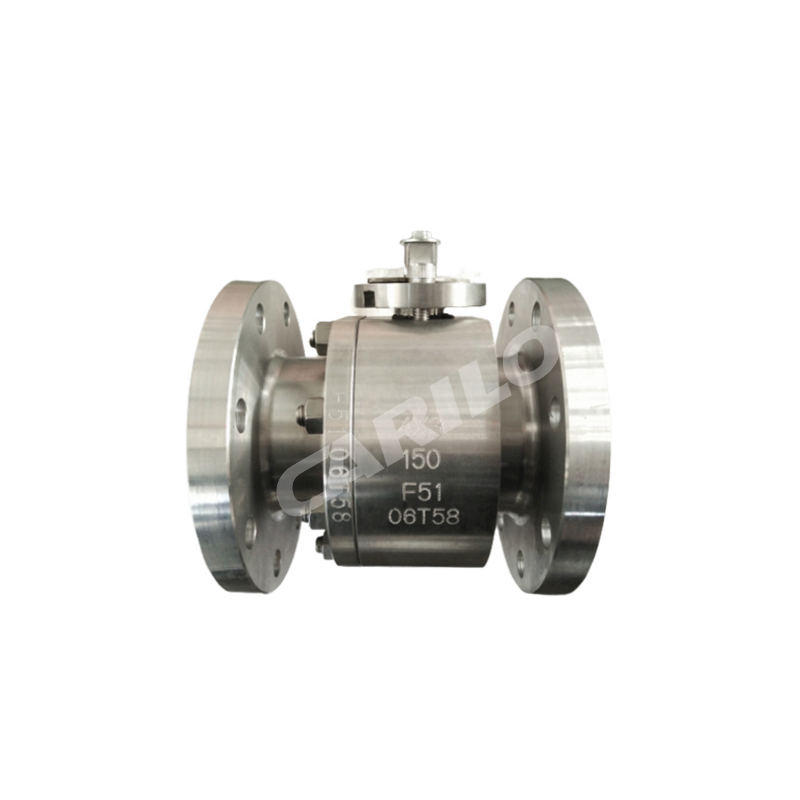
Forged Floating Metal-Seated Ball Valves
Metal-seated ball valves for steam, hot oil, refinery, petrochemical, power plant and process lines that carry solid particles.
The ball and seats use hard metal sealing surfaces that are paired and lapped together. This helps the valve keep sealing when heat, particles or frequent opening and closing would wear out soft seats. Choose a 2-piece or 3-piece forged body with full bore or reduced bore.
- 1/2″–8″
- Size range
- -29–350°C
- Temperature range
- Rate B
- ISO 5208 shut-off
- RF / RTJ / SW / BW
- End connections
When to Use Metal Seats
Choose Metal Seats for Heat, Solids and Frequent Use
Metal seats are a practical choice when high heat, sand or other particles, wear, pressure changes or frequent opening and closing can damage soft seats.
High Temperature
For steam, hot oil, furnace gas, thermal-fluid and boiler lines that run hotter than normal soft seats can handle.
Media with Sand or Solid Particles
Hard metal sealing surfaces help reduce wear caused by fine solids, sand, catalyst particles and fast-moving media.
Frequent Opening and Closing
The paired metal seats are made for valves that open and close often, helping reduce wear compared with soft seats in the same duty.
High-Pressure Lines
The forged body and retained stem are available for pressure classes from Class 150 to Class 2500.
Metal Seats or Soft Seats?
A Simple Comparison Before You Choose
Metal seats are better for heat, particles and frequent use. For clean media below 200°C that needs ISO 5208 Rate A shut-off, see the forged soft-seated floating ball valve.
| What to Compare | Metal-Seated | Soft-Seated |
|---|---|---|
| Maximum stated temperature | 350°C | 200°C |
| Shut-off class | ISO 5208 Rate B | ISO 5208 Rate A |
| Abrasive particles | Better choice | Usually not recommended |
| Frequent opening and closing | Better choice | Depends on the service |
| Available pressure range | Class 150–2500 | Class 150–2500 |
Temperature Range
Working Temperature from -29°C to 350°C
The stated temperature range is -29°C to 350°C. The final body material, seat coating, packing, bolts and actuator depend on your pressure, temperature, media and operating frequency.
Main Valve Features
Eight Features That Help the Valve Work Safely and Reliably
These features are available in compact 2-piece and 3-piece forged valve bodies for high-temperature shut-off service.
Anti-Static Device
Helps carry static electricity away from the ball and stem, reducing ignition risk in flammable service.
Anti-Blowout Stem
The stem is held inside the body so line pressure cannot easily push it out.
Bi-Directional Shut-Off
The valve can shut off flow from either direction and is tested to ISO 5208 Rate B.
Low Low-Emission Packing
Low-emission stem packing can be supplied when ISO 15848-2 Class A is required.
Hard-Faced Metal Sealing
The hard metal ball and seats are paired and lapped to handle heat, particles, wear and frequent operation.
High-Temperature Resistance
Available for stated temperatures from -29°C to 350°C. The final limit depends on the selected materials and pressure class.
Low Pressure Drop
The full-bore option keeps the flow path open and can support pigging and line cleaning.
Resistant to Particle Erosion and Frequent Switching Fatigue
Hard-faced ball and seat surfaces help resist particle erosion and reduce wear from repeated opening and closing, supporting stable sealing performance in abrasive, high-cycle service.
Bore and End Connections
Choose the Bore and Connection That Fit Your Piping
Choose full or reduced bore and the end connection based on flow, pigging, pressure class, installation space and how the valve will be removed or repaired.
Full Bore
The valve opening is close to the pipe bore, giving higher flow and allowing pigging or line cleaning.
Reduced Bore
The opening is smaller than the pipe bore, which can reduce valve size, weight and cost when pigging is not needed.
Flanged Ends
RF and RTJ flanges make the valve easy to install and remove from many process piping systems.
- Standard
- ASME B16.5 / B16.47
- Best fit
- Lines that need easy valve removal
Socket-Weld Ends
A compact welded connection commonly used on small-bore, high-pressure piping.
- Standard
- ASME B16.11
- Best fit
- Small high-pressure lines
Butt-Weld Ends
A permanent welded connection for hot or high-pressure process lines.
- Standard
- ASME B16.25
- Best fit
- Permanent welded piping
Sizes and Connections
Available Sizes, Pressure Classes and Connections
Not every size is available in every pressure class or connection. Send your requirements and we will confirm the available combination.
| Valve type | Forged floating metal-seated ball valve |
|---|---|
| Design basis | API 6D |
| Body construction | Bolted 2-piece / bolted 3-piece forged body |
| Face-to-face | Based on the selected API 6D valve design |
| Size range | 1/2″ to 8″, subject to pressure class |
| Pressure classes | Class 150, 300, 600, 900, 1500 and 2500 |
| Temperature range | -29°C to 350°C |
| Seat leakage | ISO 5208 Rate B |
| Port options | Full bore / reduced bore |
| End connections | Flanged RF / RTJ, socket weld, butt weld |
| Flange standards | ASME B16.5 / ASME B16.47 |
| Weld-end standards | ASME B16.11 / ASME B16.25 |
| Testing | API 598 and ISO 5208 as specified |
| Fire-safe requirement | API 607 fire-safe test documents available when requested |
| Low-emission option | Optional ISO 15848-2 Class A packing and test documentation |
| European pressure equipment | PED 2014/68/EU documents available when applicable |
Steam, hot oil, industrial heating, HVAC and district heating.
Refinery, petrochemical and other medium- to high-pressure lines.
High-pressure oilfield, injection, boiler and process lines.
Small-bore oilfield, petrochemical and hydraulic lines at very high pressure.
Where Each Pressure Class Is Used
Where Each Pressure Class Is Commonly Used
The examples below show where each pressure range is commonly used. The final valve still depends on the media, temperature, size and connection.
General Industrial Service
For hot industrial lines or media with a small amount of fine particles.
- Steam distribution and thermal-oil systems
- HVAC and district heating loops
- Lines with fine solids or light wear
Medium- and High-Pressure Service
For refinery, petrochemical and power plant lines with higher pressure or temperature.
- Hot refinery gas and hydrocarbon lines
- Corrosive process lines and catalytic cracking units
- Boiler feedwater, steam headers and turbine bypass lines
Very High-Pressure Service
For small-bore lines that need very high pressure ratings, metal seats and documented testing.
- Oilfield wellhead and high-pressure control lines
- Reaction injection and hydrogenation lines
- Hydraulic control, pressure test and instrument lines
Tests and Documents
Testing and Documents Available with Your Order
Tell us which tests and documents you need before production. The agreed records can be prepared for inspection and shipment.
Material Records
EN 10204 3.1 certificates and heat numbers can be supplied for pressure-containing parts.
Pressure and Seat Leakage Tests
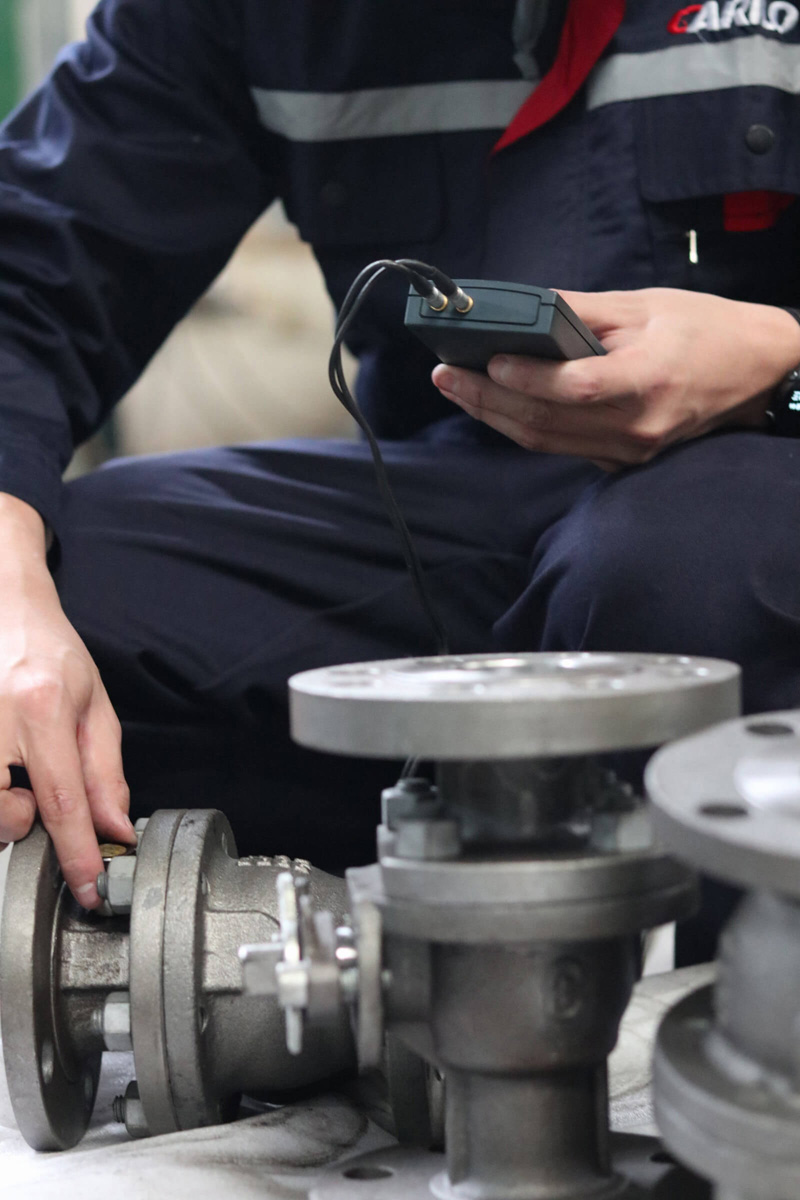
Shell pressure and seat leakage test reports can be supplied to the agreed API 598 or ISO 5208 test plan.
Size and Operation Checks
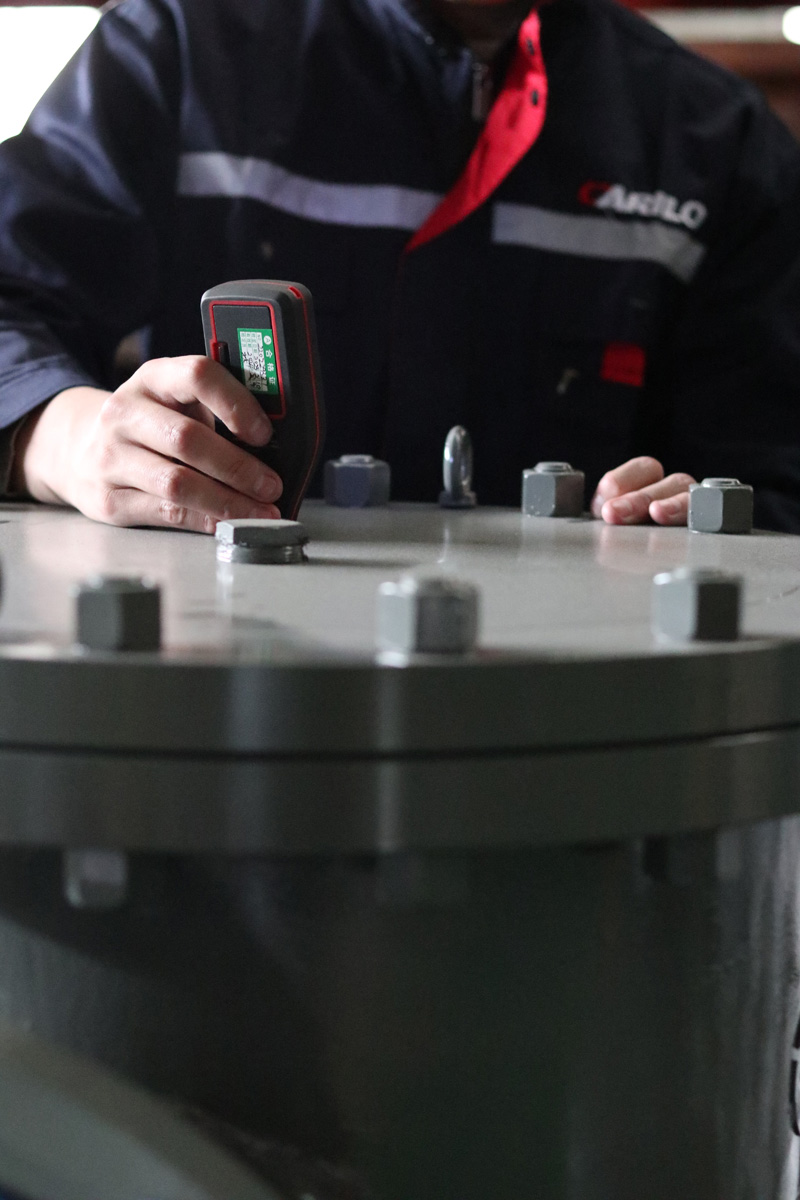
Checks can include drawing dimensions, valve opening and closing, and operating torque when requested.
Extra Inspection and Third-Party Witness
RT, UT, MT, PT, PMI, an inspection plan and third-party witness can be arranged when included in the order.
For spare parts, inspection support and project documents, see CARILO’s industrial valve service capabilities.
Standards You Can Request
Standards Available for Your Project
Tell us which standards, tests and markings your project needs. We will confirm what applies to the selected valve size, class and material.
Pipeline Valve Standard
Used as the design and manufacturing basis for pipeline ball valves.
Rate B Seat Leakage
The stated seat leakage level for the metal-to-metal sealing surfaces.
Fire-Safe Testing
Fire-safe test documents can be supplied when they are included in the project requirements.
Low-Emission Packing
ISO 15848-2 Class A packing and test records are available as an option.
2014/68/EU
PED documents can be supplied when they apply to the selected valve and order.
3.1 Material Certificate
Material certificates help you check the material grade and heat number.
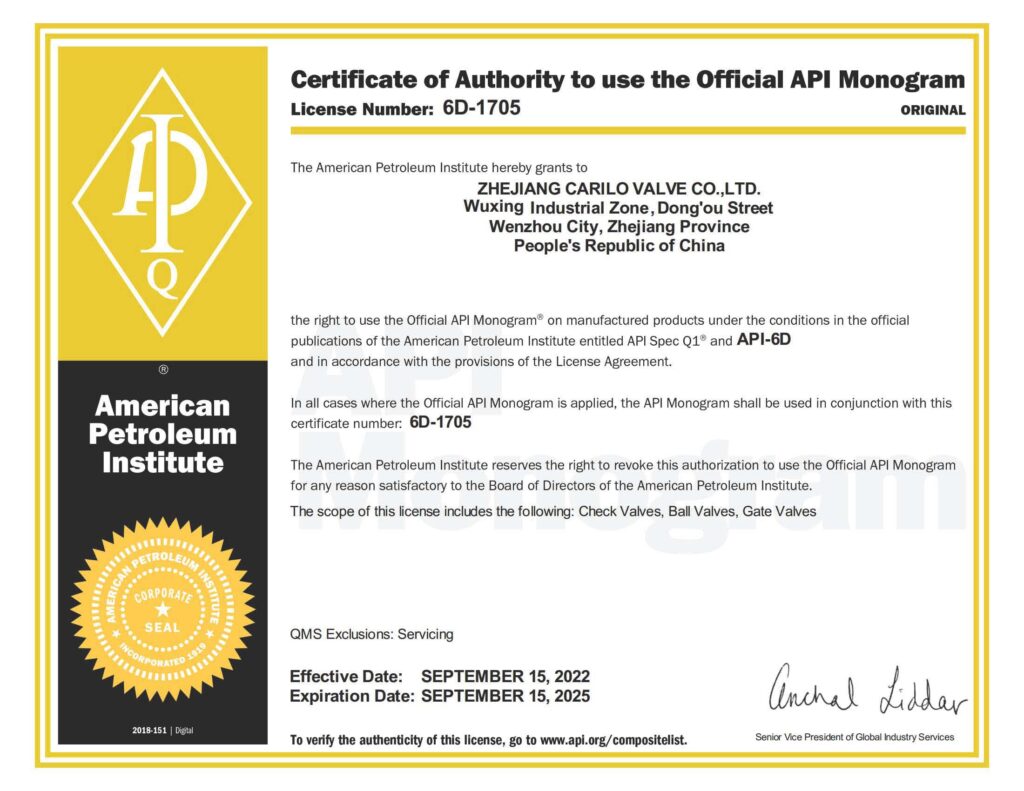
API 6D Design and Production
Valves are designed, produced and tested to the standards listed in the order.
For Temperatures Up to 350°C
Metal seats are available for hot service where the stated soft-seat range is not suitable.
Direct Factory Support
Send your data sheet directly to the CARILO team for drawings, confirmation of the details and a factory quotation.
Export Packing and Documents
Drawings, material certificates, inspection reports and export packing can be prepared for overseas orders.
Testing and Inspection Support
We can confirm the valve details, arrange factory tests and support extra inspection or third-party witness when agreed.
Certificates and Factory Details
Check the Certificates and Records for Your Order
Tell us which standards and reports your project needs. We will confirm which certificates, drawings, material records and test reports can be supplied for the exact valve size and pressure class.
- Check that the certificate covers the ordered valve
- Approve the valve data sheet and drawing
- Check material grades and heat numbers
- Confirm the inspection and test plan
- Legal name
- Zhejiang Carilo Valve Co., Ltd.
- Manufacturing experience
- Since 2000
- Facility
- Oubei, Wenzhou, Zhejiang, China
- Quality system
- ISO 9001 certificate available on request
Other Valves You May Need
Other CARILO Valves for Different Conditions
A different valve may be a better fit when the temperature, pressure, bore, installation method or shut-off requirement changes.
Forged Soft-Seated Floating Ball Valve
For clean process media up to 200°C when bubble-tight ISO 5208 Rate A shut-off is required.
View product For Larger SizesForged Trunnion-Mounted Ball Valve
For larger pipe sizes and higher loads where a supported ball improves stability and operating performance.
View product For Cryogenic ServiceForged Cryogenic Ball Valve
For LNG, liquid nitrogen and other very low-temperature media requiring an extended stem and cryogenic testing.
View product Double Block and BleedDBB Compact Manifold
Combines two isolation valves and one bleed point in a compact body with fewer flange connections.
View product For Small-Bore LinesHeavy-Duty Small-Port Ball Valve
For compact small-bore industrial lines requiring a strong forged body, reliable shut-off and complete order documents.
View product More Forged Ball ValvesHigh-Pressure API 6D Forged Ball Valves
Explore more API 6D forged ball valve options for high-pressure pipeline, terminal and process applications.
View programProduct Guides
Simple Guides for Choosing and Maintaining Valves
These guides explain seat choice, high-temperature details, actuator sizing, inspection and maintenance in plain steps.
Forged Soft-Seated vs. Metal-Seated Ball Valves
Compare temperature limits, leakage rates, resistance to particles and common uses.
High TemperatureHow to Specify a Metal-Seated Ball Valve
See which materials, seat coatings and packing details are needed for hot service.
Choose an ActuatorBreak Torque, Run Torque and Safety Factor
Learn the difference between break torque and run torque before choosing a gearbox or actuator.
MaintenanceMetal-Seated Valve Inspection and Repair
See how to check the valve, test seat leakage and maintain the packing and seat coating.
ManufacturingHow Forged Ball Valves Are Made
See how the body is forged, machined, checked and tested during production.
API 6DIndustrial API 6D Ball Valve Guide
Learn about full bore, fire-safe testing and common order documents for API 6D valves.
Common Questions
Frequently Asked Questions
Send your operating details before ordering. Pressure, temperature, media, material and test requirements all affect the final valve choice.
What is the maximum temperature for CARILO forged metal-seated ball valves?
The stated range is -29°C to 350°C. The final temperature limit depends on the body and trim materials, seat coating, packing, bolts, pressure class and process media.
What does ISO 5208 Rate B mean for a metal-seated valve?
Rate B allows a stated small leakage amount for metal-to-metal seats. It is different from Rate A, which is commonly used for bubble-tight soft seats.
Can the valve handle abrasive media?
Yes. The hard metal seats are made to resist wear from particles. Send the particle type, size, amount, flow speed and how often the valve operates so we can check the best seat coating.
Which pressure ratings and sizes are available?
The range is Class 150 to Class 2500 and 1/2″ to 8″. Higher pressure classes are available in smaller maximum sizes, so please confirm the exact size and class with us.
Are fire-safe and low-emission documents available?
API 607 fire-safe documents and optional ISO 15848-2 Class A low-emission packing reports can be supplied when included in the order.
Which end connections are available?
Options include RF and RTJ flanges, socket-weld ends and butt-weld ends. The connection standard is confirmed with the order.
What is the difference between full bore and reduced bore?
Full bore gives a larger flow path and can allow pigging. Reduced bore uses a smaller opening and may lower valve size, weight and cost.
What documents can be supplied with an order?
Common documents include drawings, EN 10204 3.1 material certificates and pressure test reports. Fire-safe, low-emission, extra inspection and third-party witness records can also be included when requested.
Get a Quote
Send Us Your Valve Requirements
Send the valve size, pressure class, media, temperature, pressure, bore, end connection, material, operator or actuator, required tests and delivery date.